

The 75th Golden Globe Awards were an occasion reflected with more than just cinema and television glory. It became one of those rare cultural moments, defined by common resolve, symbolic fashion, and a mighty statement of solidarity. Not to mention the virtually universal dress-black arrival of red-carpet women in protest to common allegations of sexual harassment and systemic inequality in various industries. Along with the unified visual declaration in support of Time’s Up initiatives and the broader #MeToo movement, the color choice signaled resistance, strength, and a shared demand for long-term change.
Against this sea of black gowns, one figure stood out unmistakably.
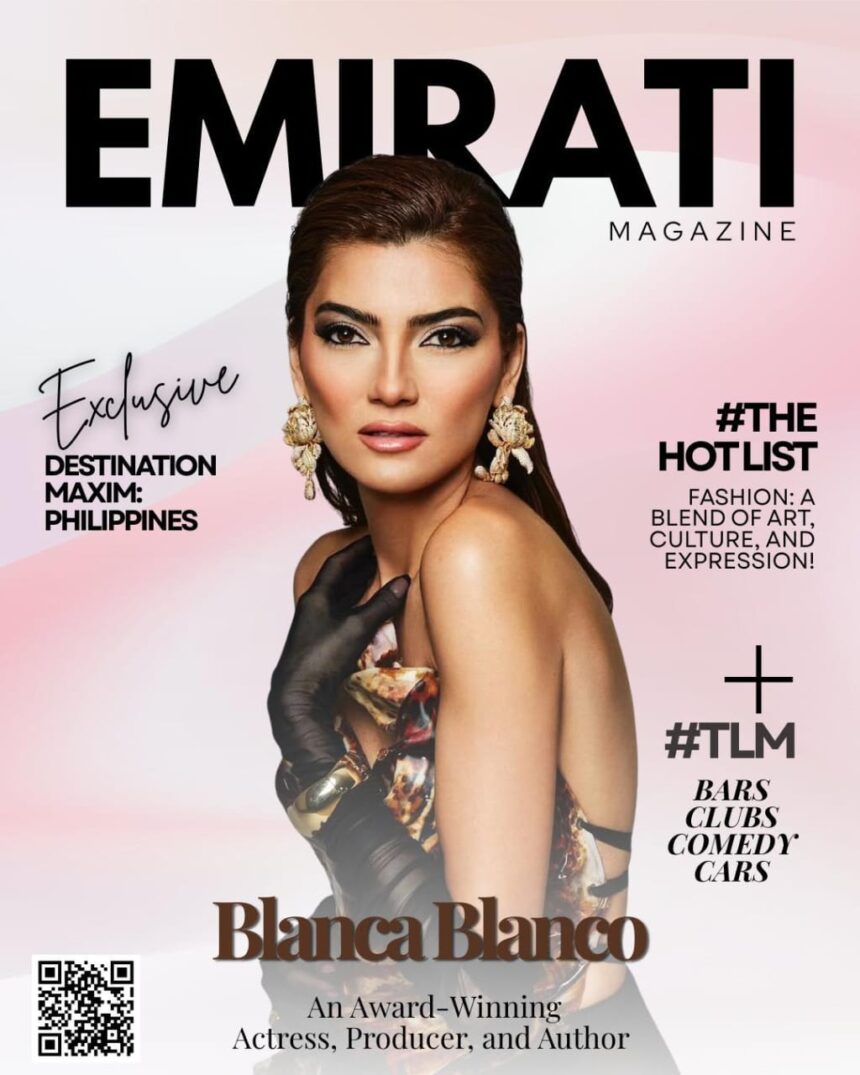
Actress Blanca Blanco came to the ceremony wearing a decidedly bold red dress, which instantly drew attention—and controversy. As photographs of her appearance began circulating in cyberspace, social media platforms erupted into flames with all kinds of different criticisms. Some said she was ignoring the movement’s message, and others suggested that her choice had diminished solidarity expressed through the
In an evening defined by collective symbolization, Blanca Blanco’s choice has often been interpreted as a break from the narrative.
However, according to Blanca Blanco, the assumptions that fueled the backlash entirely missed the point.
Wearing Red Does Not Mean I’m Against the Movement
In an interview with Refinery29, Blanca Blanco went on to address this criticism by setting the record straight and opening up about the intentions behind the sleeve. That her fashion choice had never been a bout of opposition.
“I love red,” she explained. “Wearing red does not mean I am against the Time’s Up movement.”
So for her, that color did not detract from her support of the cause, but rather, she admired and respected the women who had taken to the red carpet as a platform for advocacy.
“I applaud and stand by the courageous actresses that continue to break the circle of abuse through their actions and their style choices,” she explained.
Thus, the argument put forth formed part of a principle: empowerment is not identified with uniformity. Black was a powerful collective symbol for many, but not for Blanca Blanco. To her, the movement gained strength from the intentionality and purpose of the purpose, not its visual expression per se.
She further added that Time’s Up signifies a significant inflection point in the ongoing battle for gender equality and accountability.
“I’m excited about the time movement, really, because true time is long overdue,” says Blanca Blanco, echoing the sentiment of so many across the industry and beyond.
Read Also – Maya Nassar: Redefining Strength, Femininity, and Entrepreneurship in the Middle East’s Fitness Revolution
“The Issue Is Bigger Than My Dress Colour”
As the criticisms heightened, Blanca Blanco took to social media, further clarifying her stance. In a Twitter message, she asked masses to look beyond judgments on the surface.
“The issue is bigger than my dress color,” she wrote. “Red is passionate.”
For her, red stood for confidence, individuality, and strength—the qualities amid empowerment, as she believes. Thus, she maintained, the intention was not to derail the course of the movement but to provide an expression of authenticity while still standing in solidarity with the cause.
Yet, even with such clarity, the backlash remained insurmountable. “It hurts my feelings,” she later explained in an interview with Fox, “but I guess that’s just part of being in our industry.”
Her words conveyed a larger truth of public life in Hollywood, where scrutiny is constant and opinions shift in a heartbeat.
“We have people who appreciate you and others who don’t,” she said, offering a measured perspective shaped by experience.
Fashion, Judgment, and Culture of Shaming
Beyond just defending her individual choice, Blanco has used this moment to take on a broader issue: shaming people, which is part of public discourse, mostly when directed against women. Thanking Atria Couture, the designer of the gown, she acknowledged their artistry and professionalism.
“Atria Couture designer did an amazing job with my dress, and I appreciate them for their amazing work in dressing me,” she said.
Blanco further pointed out that mockery and judgment over something as trivial as clothing cast-off decisions are reflective of the exact dynamics that Time’s Up would want to dismantle.
So really, “Shaming is part of the problem.”
That, quite the controversy, has become more than a fashion debate. That could be a reflection of how quickly narratives are imposed, how readily individuality is criticized, and how easily a conversation can shift away from the core mission of the movement: respect, equality, and meaningful change.
Redefined Night of the Women Empowerment
The Golden Globe ceremony is replete with a lot of moments that underscore the urgency and importance of the movement. Throughout the night, #MeToo and Time’s Up echoed in the acceptance speeches and during public remarks by the honorees on stage, who often made use of the very precious time to highlight even the voices of the women who had been put aside or silenced.
One of the most historic testimonies of the evening began with Oprah Winfrey; her acceptance speech transcended the walls of the Beverly Hilton. Justice and equality were called for, as well as a future of courage and truth, and it was hailed as a call that could be defined by a movement. Here set the tone for the evening, reminding all who watched of why the movement mattered and what was at stake.
Against this background, the red dress worn by Blanca Blanco sparked yet another discussion. The very complexities of public perception, the intense pressure that hardly any attempt at even nuance is welcomed at the time of collective action, and the other things that tend to stymie things.
Making Space for Difference
Support does not equate sameness, she is saying. True empowerment, she explains, allows for diversity, interpretation, and dialogue.
As great as one gets to be “one” is subject to far greater problems beyond those attributed to fashion. It takes an extraordinary twist of cross-leg calling to carry in solidarity in public space, and more importantly, anyone outside of the mainstream road would be condemned.
The evening, in which systemic issues were fought and new futures imagined, reminds us that movements tend to crumble when unity and difference contest with one another, as does the red dress of Blanca Blanco. It is the very idea she has put forth: progress is based on similar values but not on one form of expression.
And perhaps, in generating the conversations that it did, her choice did just what meaningful moments do: exhort prompt reflection, test assumptions, and forward the dialogue.
As great as one gets to be “one” is subject to far greater challenges beyond those attributed to fashion alone. Visibility, particularly in public and symbolic spaces, carries with it an unspoken responsibility—one that often demands conformity more than courage. It takes an extraordinary act of conviction to step into that space with authenticity, knowing that any deviation from the accepted mainstream narrative risks condemnation, misinterpretation, or dismissal. In such moments, personal expression ceases to be merely aesthetic and instead becomes deeply political.
The evening in question—where systemic inequities were challenged and new futures collectively imagined—served as a reminder that movements are rarely fractured by opposition alone. More often, they falter when unity and difference are positioned as mutually exclusive rather than complementary forces. It is within this tension that Blanca Blanco’s red dress became more than an article of clothing; it transformed into a statement, a provocation, and a mirror held up to collective assumptions.
The symbolism of the red dress was not about defiance for the sake of spectacle, nor was it an attempt to distract from the gravity of the cause being represented. Rather, it embodied a central idea Blanca Blanco has long put forth: progress is not born from uniformity, but from shared values expressed through diverse voices. To expect a singular mode of expression within a movement is to deny its very humanity. True solidarity does not erase difference—it allows it to exist without hierarchy.
In a world increasingly driven by optics and instant judgments, the discomfort provoked by her choice reveals more about societal expectations than about the individual herself. Why is deviation perceived as dilution? Why does personal expression become suspect when it does not conform to an unspoken visual code? These questions expose the fragile boundaries we place around activism, often prioritizing appearance over intention and symbolism over substance.
Blanca Blanco’s presence that evening challenged the notion that there is a “correct” way to show up for a cause. Her choice underscored an essential truth: advocacy does not demand aesthetic conformity to be valid. In fact, insisting upon it risks alienating those whose identities and expressions do not neatly align with dominant narratives. Progress, after all, is not a straight line—it is a convergence of perspectives, lived experiences, and voices that refuse to be homogenized.
Perhaps most importantly, the conversation ignited by that moment achieved precisely what meaningful cultural moments are meant to do. It urged reflection rather than reaction, questioned deeply held assumptions, and pushed the dialogue forward rather than allowing it to stagnate in comfort. These are the moments that test the integrity of movements—not through opposition, but through introspection.
In this sense, the red dress did not distract from the cause; it illuminated it. It reminded us that the strength of any movement lies not in rigid uniformity, but in its capacity to hold space for complexity. And in doing so, Blanca Blanco reaffirmed a powerful message: progress thrives where courage, authenticity, and dialogue intersect.