

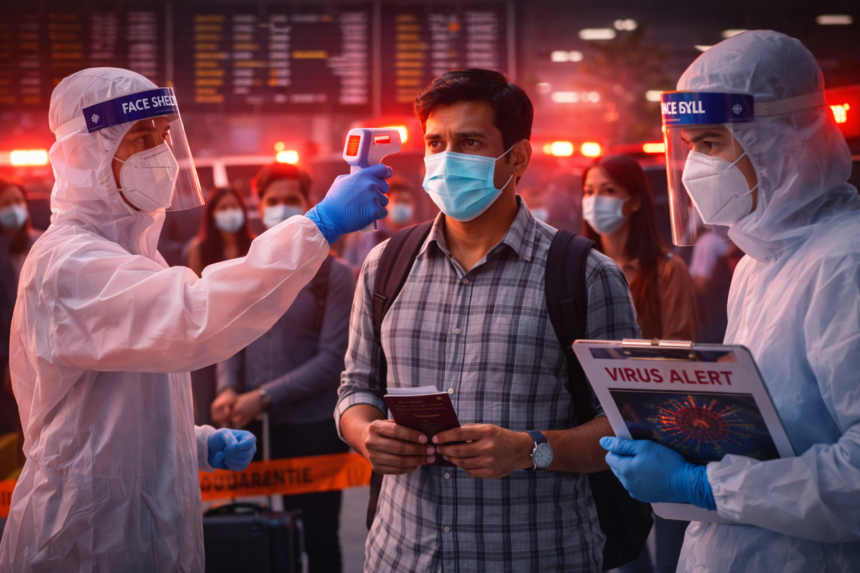
Nipah Virus Alert: Asian airports tighten health screening after Nipah virus cases in India. Learn about symptoms, how it spreads, and travel safety tips for UAE residents visiting India.
What’s Happening: Nipah Virus Detected in India
Airports across Asia have increased health screening for passengers after Nipah virus cases were detected in India. This is similar to the COVID-style health checks we saw during the pandemic.
Current Situation in India
Health officials in India have confirmed several cases of Nipah virus in West Bengal, a state in eastern India. The virus was first discovered among five healthcare workers who were treating patients.
The good news is that Indian authorities say the situation is contained. This means they believe they have stopped the virus from spreading widely.
Where Cases Have Been Found
Two main areas in India are dealing with Nipah virus:
West Bengal: The current outbreak started here, with cases reported in Barasat, near the city of Kolkata. Officials are investigating 100 to 200 potential contacts (people who may have been exposed).
Kerala: This southern state has dealt with Nipah virus before. It’s considered an endemic region, which means the virus appears there from time to time.
Dr. Sayan Chakraborty, former health advisor for West Bengal, clarified that only two confirmed cases have been reported. Other suspected cases tested negative and those patients have been sent home.
Why This Matters
Even though only a small number of cases have been confirmed, countries are taking this seriously because:
- Nipah virus has a very high death rate (40-75% of infected people die)
- There is currently no vaccine available
- The virus can spread from person to person
- Early detection and quick action are crucial
Dr. Narendra Kumar Arora, President of AIIMS Bilaspur, explained that while monoclonal antibodies (special medicines) are being obtained for treatment, global supplies are very limited.
Containment Measures
People who may have been exposed to the virus must quarantine for 21 days. This mainly affects:
- Family members of infected patients
- Hospital staff who treated them
- Anyone who had close contact with sick people
The 21-day quarantine period is longer than what we saw with COVID-19 (which was typically 10-14 days).
Which Countries Are Taking Action
Several Asian countries have responded quickly by increasing airport health screening and passenger monitoring. Let’s look at what each country is doing.
Thailand’s Response
Thailand is monitoring passengers arriving from West Bengal at three major airports:
- Suvarnabhumi Airport (Bangkok’s main international airport)
- Don Mueang Airport (Bangkok’s domestic airport)
- Phuket International Airport
What Thailand is doing:
- Fever checks for arriving passengers
- Symptom screening (asking about headaches, cough, vomiting)
- Distributing health advisory cards
- Enhanced disease-control measures at airports
These health checks help identify people who might be sick before they enter Thailand.
Nepal’s Response
Nepal shares a long land border with India, so they’re taking extra precautions at both airports and border crossings.
What Nepal is doing:
- Intensified screening at Tribhuvan International Airport (Kathmandu)
- Health checks at key land borders with India
- Health desks set up to manage suspected cases
- Monitoring travelers coming from affected areas in India
Since many people travel between Nepal and India by road, border screening is especially important.
Taiwan’s Response
Taiwan is taking perhaps the most serious approach among Asian countries.
What Taiwan is doing:
- Planning to classify Nipah as a Category 5 notifiable disease
- Category 5 is the highest level for emerging infections
- This requires immediate reporting of any suspected cases
- Strict control measures must be followed
- A Level 2 “yellow” travel alert remains for Kerala, India
A Category 5 classification means doctors and hospitals must report any suspected Nipah cases immediately to health authorities.
Why These Measures Matter
These screening measures help protect public health by:
- Catching sick travelers before symptoms get worse
- Preventing the virus from spreading to new countries
- Giving health workers early warning about potential cases
- Allowing quick isolation and treatment if needed
The screenings also reassure the public that governments are taking precautions.
Understanding Nipah Virus: What You Need to Know
To stay safe, it helps to understand what Nipah virus is and why health experts are concerned about it.
What Is Nipah Virus?
Nipah virus (NiV) is a deadly illness that spreads from animals to humans. Scientists call this a “zoonotic virus.”
The virus was first identified in 1999 in Malaysia during an outbreak among pig farmers. Since then, it has caused outbreaks almost every year in some parts of Asia, especially Bangladesh and India.
Where Does It Come From?
The natural hosts of Nipah virus are fruit bats, also called flying foxes. These bats carry the virus but don’t usually get sick from it.
The virus can spread to:
- Pigs (who can then spread it to humans)
- Other animals
- Humans directly from bats
Why Is It So Dangerous?
Nipah virus is considered one of the world’s most dangerous viruses for several reasons:
High death rate: Between 40% and 75% of infected people die. This is much higher than most other viruses.
No vaccine: Unlike diseases such as measles or COVID-19, we don’t have a vaccine to prevent Nipah virus.
No specific treatment: There’s no medicine that specifically kills the virus. Doctors can only treat the symptoms and help the body fight the infection.
Can spread person-to-person: Unlike some animal viruses that only spread from animals to humans, Nipah can spread between people.
WHO Priority Pathogen
The World Health Organization (WHO) lists Nipah as a priority pathogen. This means:
- It has high epidemic potential (could cause widespread outbreaks)
- It has a high fatality rate
- Research and preparedness are urgently needed
Symptoms to Watch For
Nipah virus symptoms appear 4 to 14 days after exposure. This is called the incubation period.
Early symptoms (similar to flu):
- Fever
- Headache
- Cough
- Sore throat
- Vomiting
- Muscle pain
Severe symptoms (in serious cases):
- Encephalitis (brain swelling)
- Confusion
- Seizures
- Difficulty breathing
- Pneumonia
- Coma
The virus attacks the brain and respiratory system. When it causes brain inflammation (encephalitis), it can be fatal.
Long-Term Effects
Even people who survive Nipah virus can face ongoing problems:
- Seizures
- Personality changes
- Behavioral changes
- Possible relapses (the virus can come back)
Some people can carry the virus without showing symptoms, which makes containment harder.
How Nipah Virus Spreads
Understanding how Nipah virus spreads helps you know how to protect yourself.
From Animals to Humans
The main way humans get Nipah virus is through contact with infected animals:
Direct contact with infected bats or pigs:
- Touching sick animals
- Cleaning areas where infected bats have been
- Working on farms with infected pigs
Consuming contaminated food or drinks:
- Eating fruit that bats have bitten or contaminated
- Drinking raw date palm sap (bats drink the sap and contaminate it)
- Eating unwashed produce
In Bangladesh, many Nipah cases have been linked to drinking raw date palm sap that fruit bats contaminated.
From Person to Person
Once someone is infected, they can spread the virus to others through:
Close contact with bodily fluids:
- Blood
- Saliva
- Urine
- Respiratory secretions
Respiratory droplets:
- Coughing
- Sneezing
- Talking at close range
This is why healthcare workers are at high risk. In the current West Bengal outbreak, five healthcare workers were the first cases detected.
Who Is Most at Risk?
Certain groups face higher risk of exposure:
Healthcare workers: Doctors, nurses, and hospital staff treating infected patients
Family members: People living with or caring for sick relatives
Farmers: Those working with pigs or in areas where fruit bats live
People in endemic areas: Residents of regions where Nipah appears regularly
Those who consume raw products: People drinking raw date palm sap or eating unwashed fruit
Airborne Transmission
Scientists know that Nipah virus can spread through respiratory droplets. In enclosed spaces with poor ventilation, airborne transmission is possible.
This is why healthcare workers must wear protective equipment, including masks, when treating patients.
Travel Advice for UAE Residents
If you’re planning to travel to India or have recently returned from there, here’s what you need to know.
For UAE Travelers Going to India
The general risk to travelers remains low, but you should take precautions if visiting Kerala or West Bengal.
Before You Travel:
Check current advisories: Follow updates from the Kerala Health Department or the Indian Embassy in the UAE.
Avoid containment zones: Don’t travel to areas where cases have been confirmed. Check which districts are affected before you go.
Pack hygiene supplies: Bring hand sanitizer, masks, and other protective items.
Know the symptoms: Understand what to watch for so you can recognize warning signs.
While in India:
Practice strict hygiene:
- Wash your hands frequently with soap and water
- Use hand sanitizer when soap isn’t available
- Avoid touching your face
Food and drink safety:
- Don’t consume raw date palm sap
- Avoid unwashed fruit, especially if it shows bite marks
- Eat cooked food from reliable sources
- Drink bottled or boiled water
Avoid risky contact:
- Stay away from bats and their habitats (caves, certain trees)
- Don’t touch sick animals
- Avoid pig farms in affected areas
Monitor your health:
- Check your temperature daily
- Watch for fever, headache, or other symptoms
- Keep a record of places you visit and people you meet
Returning to the UAE:
At the airport:
- Comply with any screening measures
- Answer health questions honestly
- Submit to temperature checks if requested
After arrival:
- Continue monitoring your health for 21 days
- If you visited affected areas, be extra vigilant
- Report any symptoms immediately
If You Develop Symptoms:
Seek medical attention right away if you experience:
- Fever
- Severe headache
- Vomiting
- Confusion
- Difficulty breathing
Tell your doctor:
- That you recently traveled to India
- Which states you visited
- If you went to Kerala or West Bengal
- If you had contact with sick people or animals
Isolate yourself:
- Stay away from others
- Wear a mask
- Avoid close contact with family members until you’re evaluated
For Travelers From India to UAE
If you’re coming from India to the UAE:
Be prepared for screening:
- Airport health checks may be conducted
- Temperature screening is possible
- You may be asked about your travel history
Know quarantine rules:
- Quarantine is mainly required for close contacts of confirmed cases
- If you weren’t in affected areas, you likely won’t need to quarantine
- Follow any instructions from UAE health authorities
Stay informed:
- Check UAE health ministry updates
- Follow official channels for reliable information
- Don’t rely on social media rumors
Prevention and Protection Tips
Whether you’re traveling or just want to stay informed, here are important prevention measures.
How to Diagnose Nipah Virus
Early diagnosis is crucial for treatment and preventing spread.
Early-stage testing:
- RT-PCR tests (similar to COVID tests)
- Samples from throat swabs, nasal swabs, cerebrospinal fluid, urine, or blood
- These tests detect the virus’s genetic material
Later-stage testing:
- ELISA tests for antibodies
- These show if your immune system has responded to the virus
If you think you’ve been exposed, seek testing immediately. Don’t wait for symptoms to become severe.
Treatment Options
Currently, no specific antiviral treatment exists for Nipah virus. Treatment is supportive, meaning doctors help your body fight the infection:
Basic care:
- Plenty of fluids to prevent dehydration
- Rest
- Fever-reducing medications
Symptom management:
- Anti-nausea medicines
- Seizure medications if needed
- Breathing support for respiratory problems
Experimental treatments:
- Monoclonal antibody treatments are being studied
- These are special laboratory-made proteins that can fight the virus
- Supply is very limited and these are still experimental
Because there’s no cure, prevention is extremely important.
General Prevention Guidelines
Avoid high-risk exposures:
- Don’t visit bat caves or roosting sites
- Stay away from areas with many fruit bats
- Avoid contact with pigs in affected regions
- Don’t handle sick or dead animals
Food safety:
- Thoroughly wash all fruits and vegetables
- Avoid raw date palm sap
- Don’t eat fruit with visible bite marks or damage
- Cook food properly
Personal hygiene:
- Wash hands frequently with soap and water
- Use hand sanitizer with at least 60% alcohol
- Don’t touch your face with unwashed hands
- Cover coughs and sneezes
If caring for sick people:
- Wear protective gear (gloves, masks, gowns)
- Avoid direct contact with bodily fluids
- Wash hands after any contact
- Follow healthcare worker safety protocols
After visiting high-risk areas:
- Monitor your health for 21 days
- Watch for any symptoms
- Report illness promptly
- Inform doctors about your travel history
Stay Informed
Knowledge is your best protection:
- Follow updates from official health sources
- Don’t spread unverified information
- Pay attention to travel advisories
- Know the symptoms and what to do if they appear
Community Protection
If there’s an outbreak in your area:
- Follow quarantine instructions if you’re a contact
- Support contact tracing efforts
- Report suspected cases to health authorities
- Help spread accurate information, not rumors
What Health Experts Are Saying
Medical professionals emphasize several key points about the current situation:
The Risk Is Currently Low
While Nipah virus is very serious, the overall risk to most travelers remains low because:
- Only a small number of cases exist
- The virus is contained in specific areas
- It doesn’t spread as easily as some other viruses
- Screening measures are in place
Early Detection Is Crucial
Health experts stress the importance of:
- Recognizing symptoms early
- Seeking medical care immediately
- Honest reporting of travel history
- Cooperation with contact tracing
Preparedness Matters
Countries are being proactive because:
- It’s easier to prevent spread than to contain it later
- Early action saves lives
- Preparedness prevents panic
- Screening catches cases before they spread
Don’t Panic, But Be Aware
The message from health officials is balanced:
- This is a serious virus that requires attention
- Current measures are working to contain it
- Most people are not at risk
- Simple precautions offer good protection
Final Thoughts
The Nipah virus detection in India has prompted swift action from countries across Asia. While the situation is concerning due to the virus’s high mortality rate, current cases are limited and contained.
Key Takeaways:
- Nipah virus cases detected in West Bengal and Kerala, India
- Asian countries including Thailand, Nepal, and Taiwan have increased airport screening
- The virus has a 40-75% death rate but spreads less easily than COVID-19
- No vaccine currently exists; treatment is supportive care only
- UAE travelers to India should avoid affected areas and practice good hygiene
- General risk to travelers remains low with proper precautions
- Monitor health for 21 days after visiting high-risk areas
- Report any symptoms immediately and mention travel history
What This Means for You:
If you’re planning to travel to India, stay informed about which areas are affected and follow health advisories. The situation is being closely monitored, and screening measures are in place to protect public health.
If you’ve recently returned from India, especially Kerala or West Bengal, watch for symptoms and comply with any health screening measures.
Most importantly, don’t panic. Follow official health guidelines, practice good hygiene, and seek medical attention promptly if you develop symptoms. Early detection and proper care make a significant difference with Nipah virus.
Stay informed through reliable sources like the WHO, Indian health authorities, and UAE health ministry announcements. Together with sensible precautions, we can prevent the spread of this serious virus while maintaining safe travel and normal life.

Read More : Emirati business mag
Reference By : Gulfnews.com