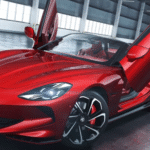

Porsche will start their transformation by gradually exiting the internal combustion engine and entering electric mobility. In this need for heavy work, the Porsche is redefining the meaning of a sports car in an electrifying automotive climate due to its well-acclaimed nature accompanied by performance-oriented glory and precise engineering. Two highly famous nameplates in their ultimate states—the Taycan and the 718 Cayman—have become the epicenter of this transition. While the changes were said to introduce some unwilling farewells to some gasoline-powered legends, the new hypothetical generation ushers in a different life dimension of sustainability, advanced technology, and electrified performance.
Market Resetting and An End to an Era
The physical distinction of being the last generation of a gasoline-powered internal combustion engine 718 Cayman and 718 Boxster unveiled at Clearwater for quite some time before their gradual extinguishing in favor of Taycans is a huge historic juncture. Of the 26-year-old Porsche Taycan, its barriers in its historic curvatures both within and outside Europe of emission standards and the regulatory climate reflected and converted an appalling wide acceptance in view of increasing EVs in the automotive market globally.
For long-time fans, this is a remarkable moment that places an emotional wrench upon the heart of discontinuing gas-powered mid-engine sports cars. The 718 Cayman and Boxster have reverberated with praise for their balance, their purist interaction with the driver, and their engine character. In electrifying the cars, the company states that it shall not compromise on these very principles but rather equally honor performance in conjunction with the areas of the future regarding efficiency and sustainability.
Position of the Taycan in Porsche’s Future
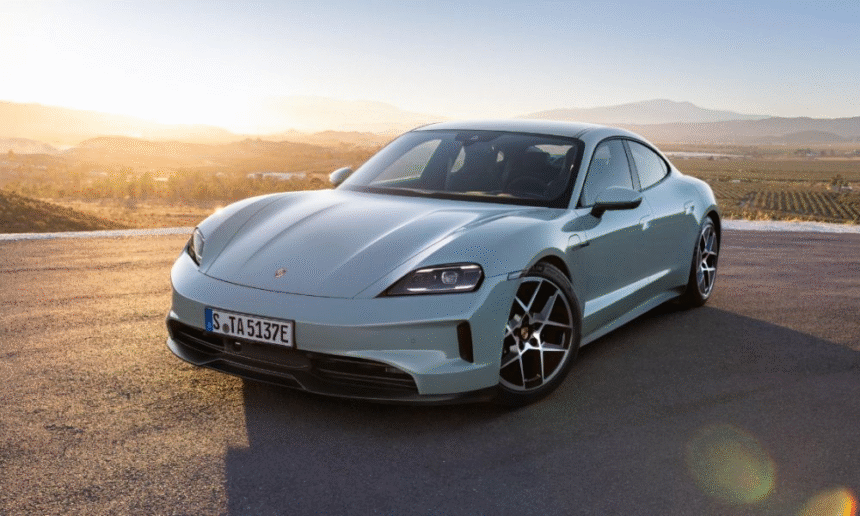
The Taycan has already made itself the fulcrum of the Porsche electric ambitions. As the first fully electric car in production from Porsche, it had shown that with no compromise on both performance and electrification, the two can well coexist. Strong demand for the Taycan continues while it takes root in core global markets, and new inventories are arriving at dealerships.
The newest version of the Taycan will be premiered in the second half of 2024, with a base price of $80,450, not including the delivery charge of $1,650. By positioning itself this way, the Taycan becomes an attractive player in the luxury electric sports sedan segment. Further, it clings to the identity of Porsche in converting motorsport DNA into electric format and appealing to both the traditional buyer and the new.
Read Also –
Maya Nassar: Redefining Strength, Femininity, and Entrepreneurship
Blanca Blanco Breaks the Mold: The Story Behind Her Red Dress
Engineering and Performance Features Of Taycan
The overriding trait of the Taycan range is performance. Power output across the configurations starts from the vicinity of 402 hp for standard versions up to 630 hp for the top performers. The massive spectrum of performance on offer, therefore, caters to the humdrum errand boys and the downright thrill-seekers yearning for exhilarating acceleration and track-ready dynamics.
Taycan stands low and sporty indeed. Standing at just under 64 inches in height, the Taycan is 188.4 inches long and 84.7 inches wide. Such a configuration aids aerodynamic dull work while at the same time lending aggressive design language imparted by Porsche.
The electric drivetrain architecture also assists practicality. The battery pack and motors are positioned such that less room is wasted for the interior than a regular layout. To complement this beauty, there’s a front trunk—or ‘frunk’—with about 3 cubic feet of usable space—good for stowing away extra things—an EV-exclusive advantage in this performance class.
Innovation in the Interior and Utility.
Just as performance factors the Taycan, so should versatility and sustainability be some of its selling points. With just below 4,409 pounds of gross towage, it defies fervent generalities concerning electric vehicle utility. This functional differentiation creates an aura fit for those drivers who yearn for performance and utility equally.
Porsche has painstakingly pursued having an ecologically sound vehicle with the diligence of not compromising even an ounce of luxury in the interior. Eco-synthetic materials meet premium-feel expectations from its clientele, while lexus-free seats, recyclables, and more in the harnessed interior go hand-in-hand with Porsche’s sustainability agenda.
There is also an emphasis placed on digital integration in the interior designs with state-of-the-art infotainment, configurable displays, and driver controls engaging comfort and interaction alike.
Reimagining the 718 as an Electric Sports Car
Most probably, the conversion of the Boxster and Cayman into full-bred electric cars would top anyone’s list of expectations as far as Porsche’s electrification is concerned, if only to talk about emerging content firing forth the news that Porsche has earmarked a new sports car platform for the future electric 718.
The platform would address, perhaps, the most pressing general question regarding an electric sports car, and that is simply the issue of mass. By rationalizing battery and structure, Porsche would like to sustain an agility and handling attribute that has characterized the 718 for decades.
Expected Pricing and Market Positioning
For the entry-level launch of the electric 718, the figure is said to start below $78,000 and, likely, could soar by several thousand dollars for high trims and options to about $105,000. By effectively enclosing the electric 718 in between fine sports cars, the strategy turns out to be a magnet driving the potential buyers towards a combination of up-to-the-minute technology and the renowned dynamics of Porsche.
This outline for pricing means that the electric 718 will have multiple variants, permitting customers to pick a performance level and features, all while riding a fine line in terms of pricing with other models in its portfolio.
Performance, Range, and Charging Capabilities
As for its powertrain architecture, the first electric 718 is expected to be rear-wheel-driven under the principles of a single motor, at least as a first stage. There would be a second, more powerful derivative—an equivalent GTS—were it all-wheel-driven and fine-tuned for better acceleration, traction, and performance.
Estimates of within-the-whisker ranges suggest something like 250 miles, thereby bouncing the scales to a balance between raw performance and real-world applicability. The most significant aspect of the electric 718, however, is that it has been designed around an 800-volt architecture, which enables DC fast-charging capabilities of up to 270 kWh. I’ll be honest in saying that I’ve lost the thread of mind with that phrase.
Design philosophy and battery installation
In homage to its lineage, Porsche intends to install the battery pack behind the driver seat, mimicking the mid-engine configuration of the gasoline 718. This makes for optimum weight distribution and handling characteristics, basically talking about Porsche’s resolve to keep the driving experience—albeit through transmission technology changes—alive.
Crosswind-inspired design is a pure 718 shape against the front with low-slung proportions and athletic form language that can also be matched with its counterparts, Cayman and Boxster, with small tweaks incorporated on aero surfaces for improved efficiency and range.
Next in Row: Porsche’s Electrified Brand Identities
Not only is the transition to involving electric vehicles a technological transformation; fundamentally, it heralds the transformation for the brand’s future. The end of an era for much-loved gasoline models may find consolation in knowing it birthed electric successors in which Porsche has faith to innovate without losing identity.
Porsche will build the electric sports car gold standard by means of high-performance engineering, smart design, and sustainable practice. The electric 718 is surely coming along with this brave and well-accustomed spirit—the whole way, whether roaring through a beautiful forest or cruising down some endless highway—finalized and clearly announced by the Taycan.
It doesn’t just catch up on this transition; it intends to lead, making sure that the worlds of performance, luxury, and innovation can never be separated, whatever may be turning the wheels.